Capeweed Spraying by Drone: A Practical Option for Wet Winter Paddocks

Capeweed has been a recurring problem across Gippsland this winter.
Several farmers have contacted Swift Drone Solutions after seeing it spread through their pastures—often while wet, soft or waterlogged ground has made access with conventional spraying equipment difficult.

Capeweed can provide some feed value early in the season, but it also competes with desirable pasture species for space and resources. Agriculture Victoria notes that capeweed contains around 85% water and loses feed quality earlier than perennial grasses and legumes. Allowing broadleaf weeds to set seed can also contribute to the problem returning the following year.
Timing can be difficult in winter
Capeweed control is not simply about deciding to spray. The weeds need to be at the right growth stage, the chemical plan must suit the pasture, and the weather needs to allow a safe and effective application.
Then there is the condition of the paddock itself.

Heavy machinery entering wet winter paddocks can create wheel ruts, compact the soil, damage pasture and potentially become bogged. Waiting for the ground to dry may avoid that damage—but it can also allow the capeweed to become more established.
This is where an agricultural drone can provide another option.
The advantages of spraying capeweed by drone

No wheel ruts or soil compaction
The drone sprays from above without driving over the paddock. This avoids adding wheel damage to already wet or vulnerable ground.

More opportunities for timely control
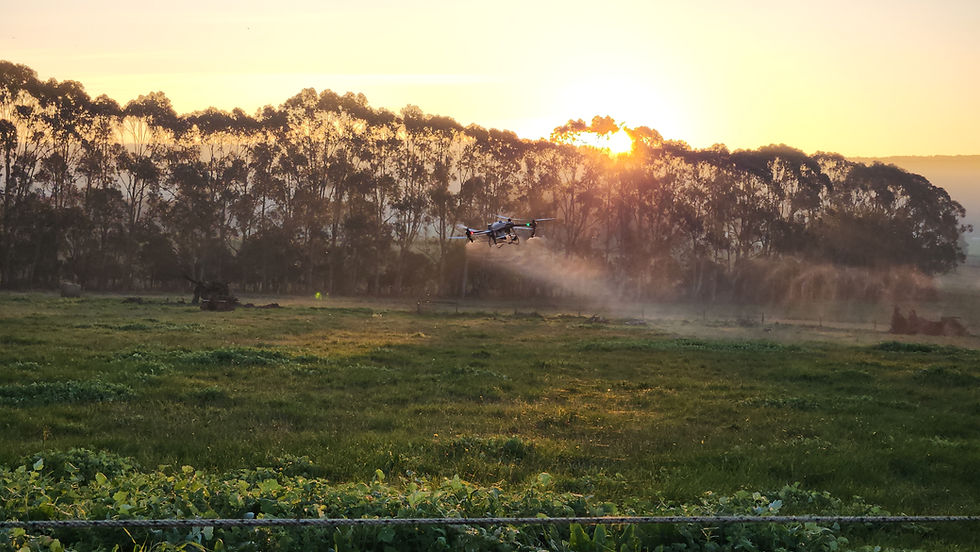
A paddock may be too soft for a tractor while still being accessible for a properly planned drone operation. This can help farmers act when the weeds and weather conditions are suitable rather than waiting for the ground to support heavy machinery.
Precision application
GPS-guided flight paths help the drone follow the planned treatment area consistently. Rotor downwash also helps move droplets downward towards the pasture canopy.
Access to difficult areas
Steep hills, wet gullies, rocky sections and awkward corners can be difficult or unsafe to reach with conventional machinery. A drone can treat these areas without needing to drive through them.
The drone is one part of the plan
Drone spraying does not replace good pasture and weed management.
Agriculture Victoria recommends combining control methods rather than relying on one approach alone. Maintaining competitive pasture cover, preventing seed set and using appropriate grazing or follow-up control can all contribute to reducing future weed pressure.

Chemical selection, application rates, withholding periods and potential effects on clover or other desirable pasture species must also be considered. Always follow the current product label and seek advice from an agronomist or chemical professional.
What do we need to assess your property?
1. A property map
Take a screenshot using Google Maps or Apple Maps in satellite view and highlight each area you may want treated.
This helps us assess the area, terrain, access and surrounding airspace before arriving.
2. A chemical plan
The landowner or agronomist must determine the appropriate chemical, application rate and treatment plan.
Swift Drone Solutions does not provide agronomic advice, but we can guide you or connect you with a trusted agronomist or chemical expert.
3. Safe access near the spraying areas
Our ute or trailer, 400-litre batch tank and generator need to be positioned safely and reasonably close to the treatment area.

The remote pilot must also maintain visual line of sight with the drone. Hilly or divided properties may require several safe setup locations.
Send us your property map to begin preparing for the next suitable spraying opportunity.
Swift Drone Solutions
Based in Yinnar—servicing Gippsland.
Airborne precision. Ground-level results.

Comments